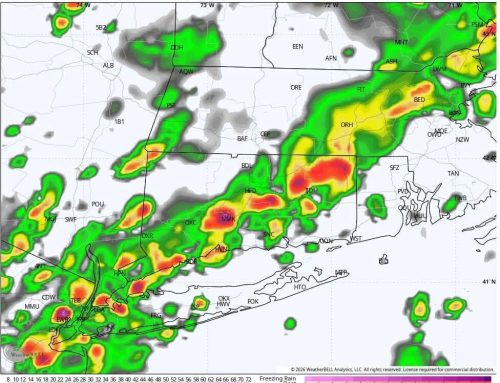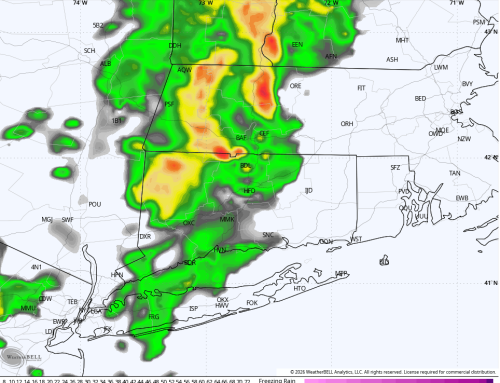
Nothing captivates weather watchers more than a lightning-heavy thunderstorm. On Monday night, a strong storm moved into Western CT and produced a prolific light show across many towns in Northern Fairfield and Southern Litchfield County. Lightning is one of nature’s most spectacular phenomena, and it can appear in a variety of colors depending on atmospheric conditions. One of the most common things I hear people comment about, besides the audio level of the thunder, is the color of the lightning. Below is a quick list of the colors of lightning:
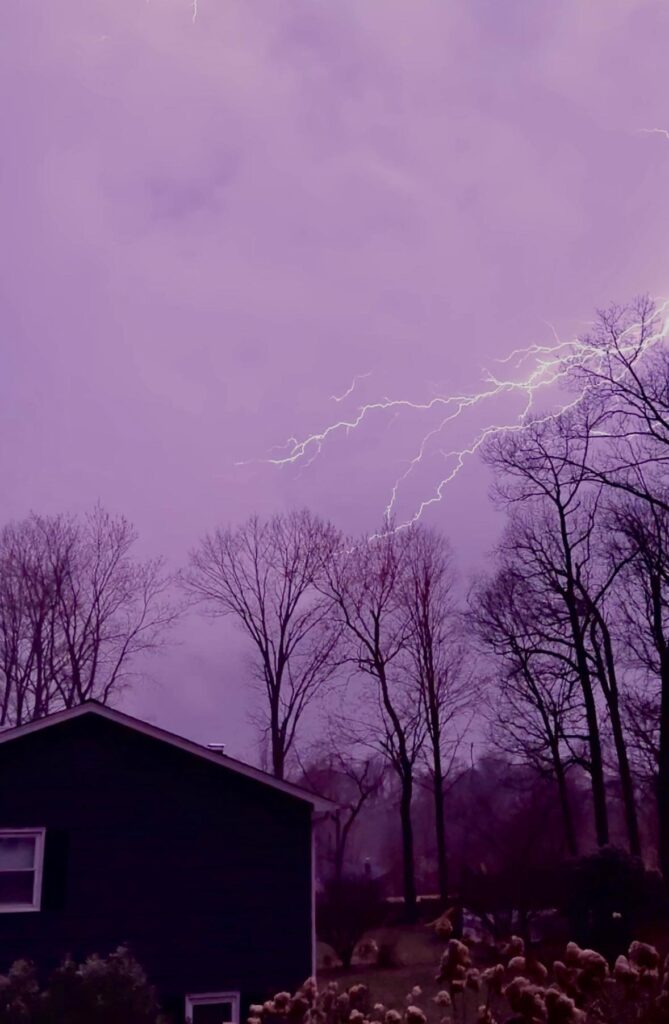
Lightning captured in Bethel – Kat Drake
Colors of Lightning
- White Lightning: The most common color, typically seen when the air is relatively free and clear of particles.
- Blue Lightning: Often observed during storms with high humidity. The blue color is due to the scattering of shorter wavelengths of light by water vapor.
- Purple Lightning: Recently reported and captured in Western Connecticut on Monday evening. Purple lightning can occur when there is a mix of red and blue light scattering, often seen during intense, high precipitation storms.
- Yellow Lightning: This color can be seen when there is a lot of dust or pollution in the air.
- Green Lightning: Rare and usually observed during snowstorms, where snowflakes can bend light to create a green hue.
- Pink Lightning: Extremely rare and typically seen during snowstorms with large flakes, similar to green lightning.
These variations in lightning color are influenced by factors such as temperature, air composition, and the presence of particles in the atmosphere. Next time you watch a few strikes, know the color can tell you a little bit about the atmosphere!