Once again, we have a shot at seeing the aurora tonight.
The sun erupted again on Wednesday, producing a modest C6.7 flare. While the flare strength was very weak, especially compared to the M and X class flares over the last week and a half, the eruption had a lengthy duration, and produced a very notable CME (coronal mass ejection). Due to the expected CME arrival and resulting geomagnetic storm, the SWPC has issued a G2 level geomagnetic storm watch.
We can clearly see the CME emerging from the sun in coronagraph imagery.
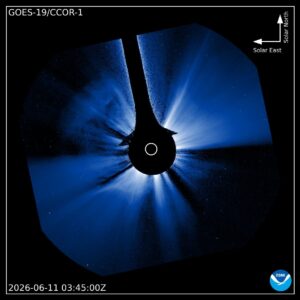

Coronagraphs showing a defined halo as the CME rapidly expands away and outwards from the sun.
The material appears to extend outward on all sides, classifying this as a full-halo CME. That means some material is almost certainly going to strike Earth. However, we also observe most of the material, or at least the densest part traveling mainly to the left (solar east) of Earth, so the best part of the CME will likely miss us. When we take a look at modeling, we see a similar idea.
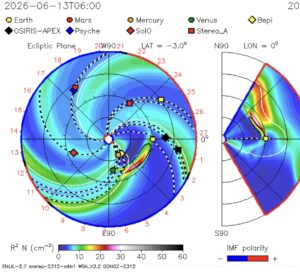
NASA M2M Model showing the CME hitting Earth as a glancing blow, with the core missing behind Earth’s orbit or East as seen in the top-down view (left), and above Earth’s orbit as seen in the side view (right).
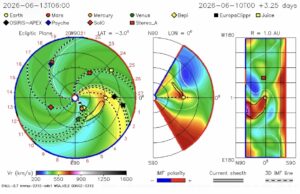
NASA M2M Model solar wind velocity showing the CME hitting Earth as a more direct hit, with the highest speed core meeting Earth squarely as seen in the top-down view (left) and in the side view (right).
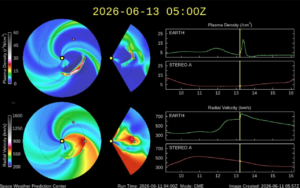
SWPC WSA-Enlil Model showing the CME hitting Earth as a flanking hit, still with the core missing behind Earth’s orbit or East as seen in the top-down view (left), and above Earth’s orbit as seen in the side view (right). Density is on top and speed is on the bottom.

HUXt Model showing the CME grazing Earth as a glancing blow, with the core missing behind Earth’s orbit or East as seen in the top-down view.
Arrival is estimated around early morning time UTC on June 13, which translates to late tonight in North America. If it arrives on time, we’ll have a decent shot at aurora tonight. I am a lot more confident on the arrival time of this CME compared to the recent CMEs that arrived late, due to the current solar wind landscape between Earth and the Sun. Still, it’s possible the CME arrives late or even misses entirely.
Yesterday, we saw periods of G1 conditions due to the influences of a coronal hole co-rotating interactive region (CIR).
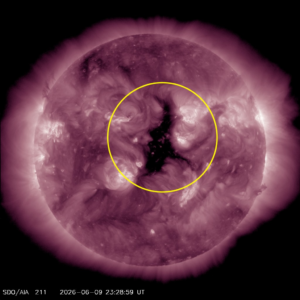
SDO/AIA ultraviolet imagery of a coronal hole on the sun directly facing Earth a few days ago, visible as an extremely dim region.
Basically, a coronal hole is an opening on the sun’s surface that provides a constant stream of high-speed solar wind. This stream catches up to the slower solar wind ahead of it, creating a dense wave of plasma just ahead of the fast-moving solar wind known as a CIR. We have now cleared the CIR, meaning that the solar wind along the CME’s path to Earth should be cleared out, as well as being much faster than the average solar wind, allowing the CME to maintain much of its initial speed and travel smoothly to Earth.
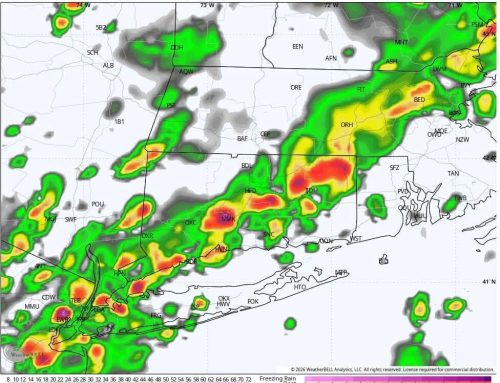
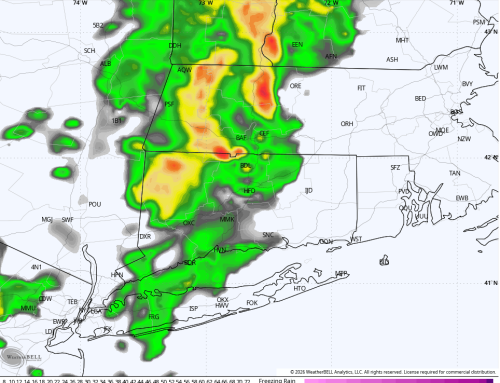
Clouds may take some time to clear out after our severe thunderstorms tonight, which could pose a challenge for aurora photography. However, gaps are likely, as skies should clear out near completely by the end of the night.
Until the CME arrives at our satellites, we still have a limited idea of how things will play out. Tonight is definitely worth watching for aurora. High hopes, low expectations.