One of the most frequently asked questions I receive from students when I visit local schools is, “What do you think was the worst snowstorm of all time?” The answer is always the same.
The Blizzard of 1888, also known as the “Great White Hurricane,” is one of the most infamous blizzards in United States history, and certainly the ‘granddaddy’ of all Connecticut winter storms. Connecticut was particularly hard hit during this event, and the legends of this storm have been passed down through generations. The following stories are based on quotes from people who lived through the storm, archived press headlines from the era, and meteorological reanalysis of the event. Based on primary and secondary sources, I estimate the snow totals from this storm to be roughly 30-40 inches throughout much of the state. Isolated areas, especially in Central CT, reported up to 50″. While this is remarkable in its own right, but the heavy snow was accompanied by hurricane force wind gusts up to 75 mph, near-zero visibility, and wind chills below zero. Widespread drifts of 15-25 feet were reported. This truly violent blizzard lasted for the better part of three days, from March 11th to March 14th, 1888.

Surface Analysis Blizzard of 1888 – Note Low Pressure is tucked near Nantucket.
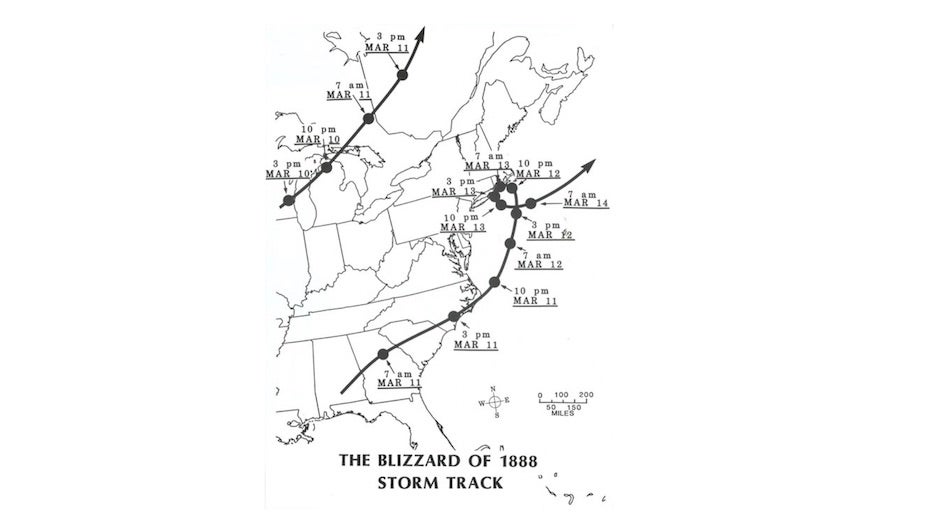
As you will read in the following stories, it becomes clear this storm had a tremendous impact on the residents at the time. Striking with little warning, the blizzard was also responsible for approximately 400 fatalities across the region, making it both an incredible and incredibly tragic event. To this day, the Great Blizzard of 1888 remains largely unmatched in terms of snow, wind, and overall impact in New England. Based on reanalysis of the event, low pressure likely stalled near Nantucket, with arctic air funneling in behind. This “loop” in the storm track and intense temperature gradient allowed for prolonged blizzard conditions across SNE.
The first story from the storm comes from Redding. Helen Upson of Redding, interviewed in 1960 about the storm that took place during her childhood, remembers, “After the storm, drifts reaching second-story windows were frequent. In orchards, just the tips of the upper branches of the apple trees protruded from these small mountains of snow. The telegraph service was crippled, as everywhere, wires were down. There were no telephones in those days.”
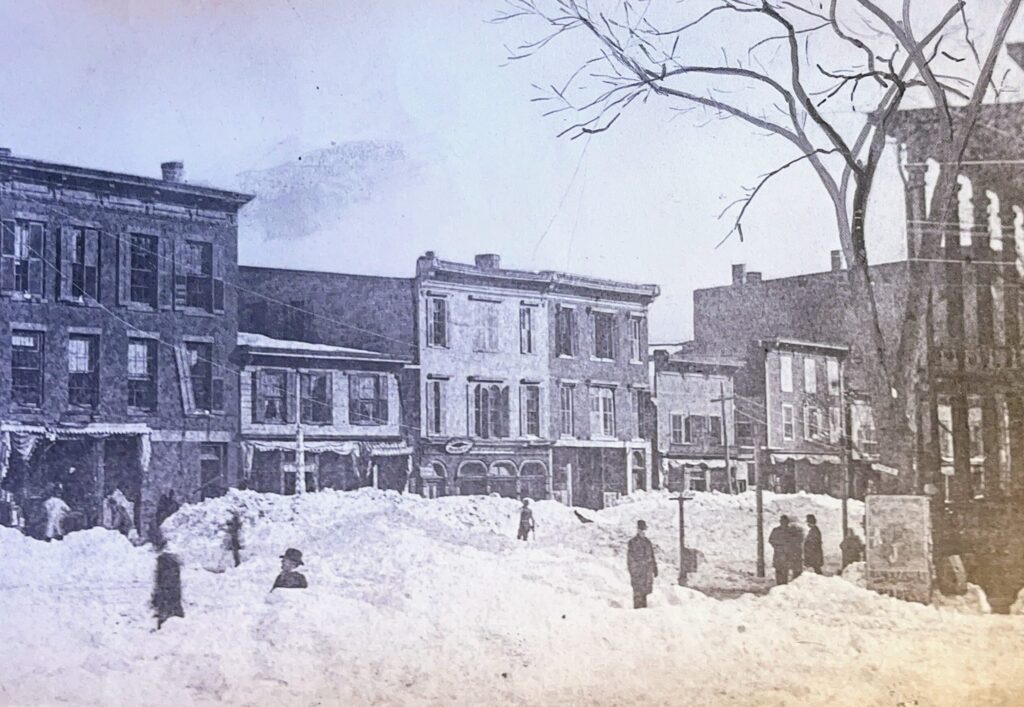
Downtown Danbury after the Blizzard – March 1888- New Times Photo
Similarly, Howard Peck of New Milford writes, “By mid-afternoon that day, foot travel was almost impossible due to the depth of snow, huge drifts, and winds of great velocity. An indication of the height of the drifts on Bank Street is that after the storm had subsided and the cleanup had been undertaken, the shovelers tunneled through the drifts to open the sidewalks.” In the days of horses and buggies, local train service was essential to the movement of people and goods through Connecticut communities. In Ridgefield, the local train got stuck at the Branchville station in enormous drifts of snow, essentially cutting off Ridgefield from the outside world for an entire week before the roads and the tracks were clear. It had to be shoveled out by hand. The Ridgefield Press headline after the storm read, “A Howling Blizzard! The Storm Rages Furiously for Two Days! Cities and Towns Paralyzed! Ridgefield Shut Off from Outer World for Nearly a Week! Traffic on All Roads at a Standstill!”
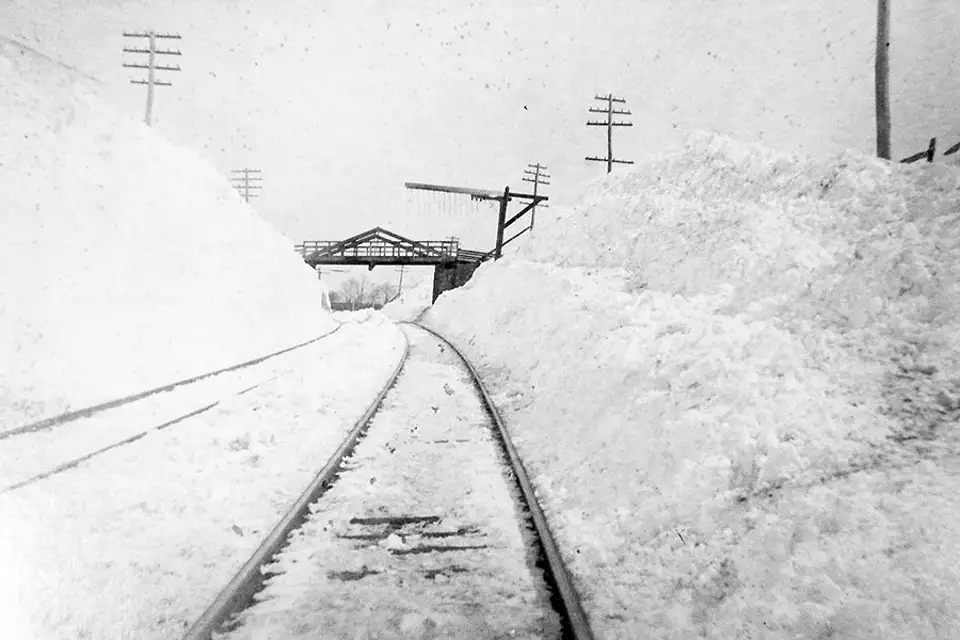
Wilton, CT after the Blizzard of 1888 – Wilton Historical Society
It is also important to remember many of the towns in Connecticut were rural farming communities in 1888. Raising livestock was a way of life. This story gives perspective to not only how deep the snow was, but also some of the suffering this storm caused. On one local farm, a large flock of sheep was buried under the snow. The living animals were located by breathing holes on the surface. Many of the flock were dead, but several had survived by eating wool from the backs of their dead companions. In fact, all over town, such animals as sheep, pigs, and goats, buried under the snow, were located by surface breathing holes. This resulted in “hibernating” domestic animals of the above types, with turkeys, chickens, geese, and even a few calves, being dragged into house cellars to thaw out.
Although March temperatures were warm shortly after the storm, snow melted very slowly that year in the shadows of overhanging cliffs and sheltered ravines of our local towns. Stories from Bethel, Redding, Newtown and Monroe all mention snow piles lasting from late May through June and even into early July.
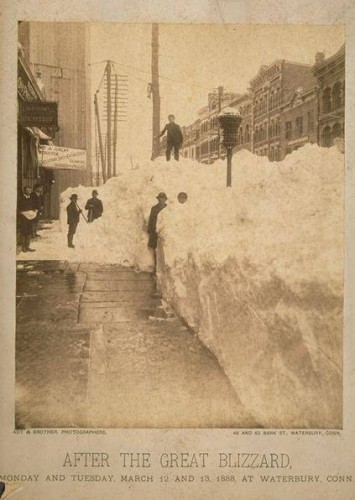
Huge Snow Drifts in Waterbury, CT – March 1888
I often joke that you know a storm was truly intense when no one today is alive to remember the Blizzard of 1888, but everyone still considers it the worst storm to ever hit. It is important to know your local weather history and just how bad conditions can get. If it happened before, it is only a matter of time until it happens again.