If you want a fun word to throw around the office, the light phenomenon many observed this afternoon was a vivid display of “Crepuscular” rays. Crepuscular has always sounded like some sort of medical anatomy term to me, but these rays are beaming.
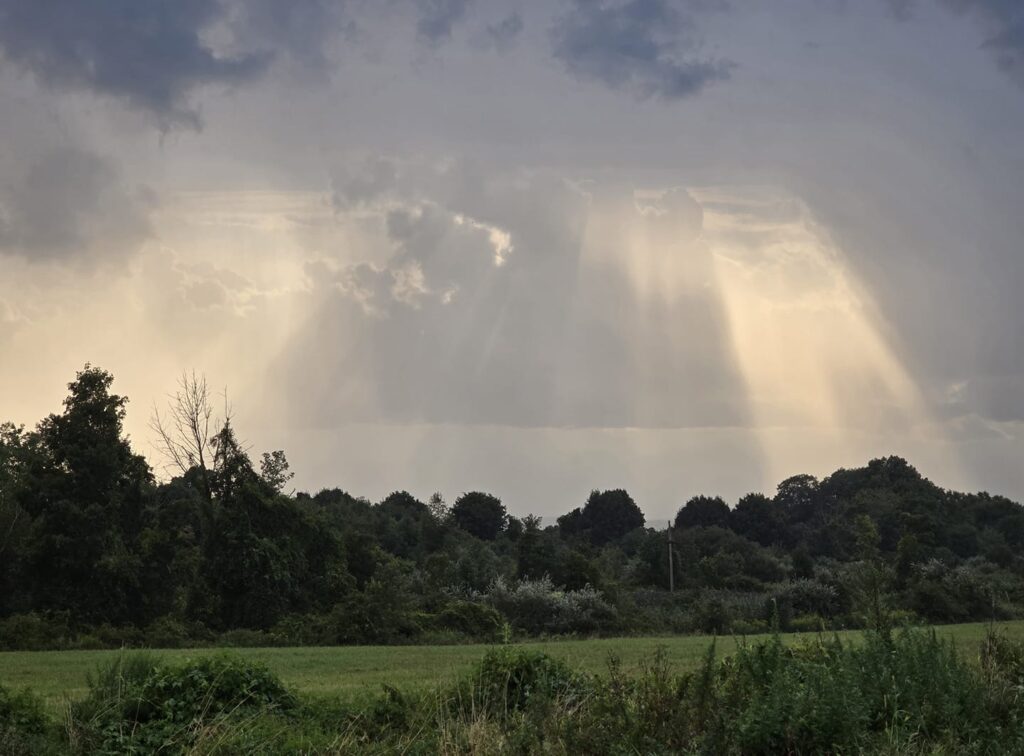
Photo shared from Keith A Swanhall Jr.
Crepuscular rays, often referred to as “sunbeams” or “God rays,” are stunning natural phenomena that occur when sunlight streams through gaps in clouds, creating distinct rays of light that appear to fan out from the sun. The term “crepuscular” originates from the Latin word crepusculum, meaning “twilight,” reflecting the fact that these rays are most commonly observed during sunrise or sunset, when the sun is low on the horizon. Today, however, people were able to spot them during mid afternoon!

Carol Saviano in Newtown
The formation of crepuscular rays involves a combination of atmospheric conditions and light scattering. When the sun is near the horizon, its light must pass through a thicker layer of the Earth’s atmosphere. During this passage, the light can encounter various obstacles, such as clouds, mountain ranges, or even large buildings. When there are gaps in these obstacles, sunlight can pass through and illuminate the atmosphere along the path, creating beams of light. The contrasting areas of light and shadow give rise to the appearance of rays.

Heather Kossluk in Southbury
The rays appear to fan out from the sun due to perspective; while the rays are actually parallel, the effect of viewing them from a distance causes them to appear as though they converge at the sun’s position in the sky. This optical illusion is similar to the way train tracks seem to converge in the distance.